
03.05.26 · 6 min read
Some founders don't want to be the face and voice of the company. At the early stages, founder voice is critical to go-to-market execution and your first million in pipeline. If you can't evangelize the problem the product solves, you can't build a market. This piece breaks down how to get started and highlights some of the best examples of founder-led voice driving traction to hypergrowth.
Your ability to articulate the problem your startup is solving is just as critical as product and engineering. If you can't evangelize the problem, you can't build a market.
Every iconic founder-led software company has this. A voice. A thesis. A vision of the future, and the one thing standing in the way.
At the early stages, founder voice is critical to go-to-market execution and your first million in pipeline. It's also what carries you from seed to hypergrowth.
Some founders don't want to be the face and voice of the company. They want the product to do the talking. They want the team to carry the message.
This sends GTM into the field ill-equipped. No conviction. No differentiation, clarity of purpose, or singular voice.
AI compounds the problem in two ways.
First, it's now hilariously easy to create vanilla marketing content. If GTM doesn't have the attention-arresting perspective of the founder at the center, it blends into the blur. The slop cannons of sameness will drown you out.
Second, it's getting easier to build software. Product alone is no longer a defensible moat. And unfortunately, the best product doesn't always win the market. Great GTM can get second or even third-best products to the top.
My formative years in developer marketing were with New Relic from 2013 to 2016. Our founder Lew Cirne was a new breed of CEO: deeply technical, contributing code, and loudly evangelizing his worldview. Developers don't have enough data!
He told a tight narrative with villains, a promised future, and how developers were the heroes enabled by data.

His voice was the foundation of the company. The thesis behind the flagship Application Performance Monitoring (APM) and every subsequent SKU. The sales messaging. The web copy. And the soul behind arguably the most successful community swag campaign of all time: the Data Nerd shirts for deploying the product.
Iconic founders have this: One line. Instantly clear who it's for and why it matters.
Mitchell / HashiCorp: Infrastructure should be code, not tickets.
Guillermo / Vercel: The frontend should be instant by default.
Charity / Honeycomb: Debugging production should be exploration, not guesswork.
Sid / GitLab: If it can be open source, it should be.
Sam / Mastra: Every developer should be building agents.
Before Mastra, the open source TypeScript agent framework, agents were the domain of ML engineers using Python. A relatively small population compared to the universe of TypeScript developers.
Sam used his voice to make a market and then serve it by writing a series of concise how-to books. He gives them away to devs on LinkedIn, events and meetups, and in boxes sent to teams.
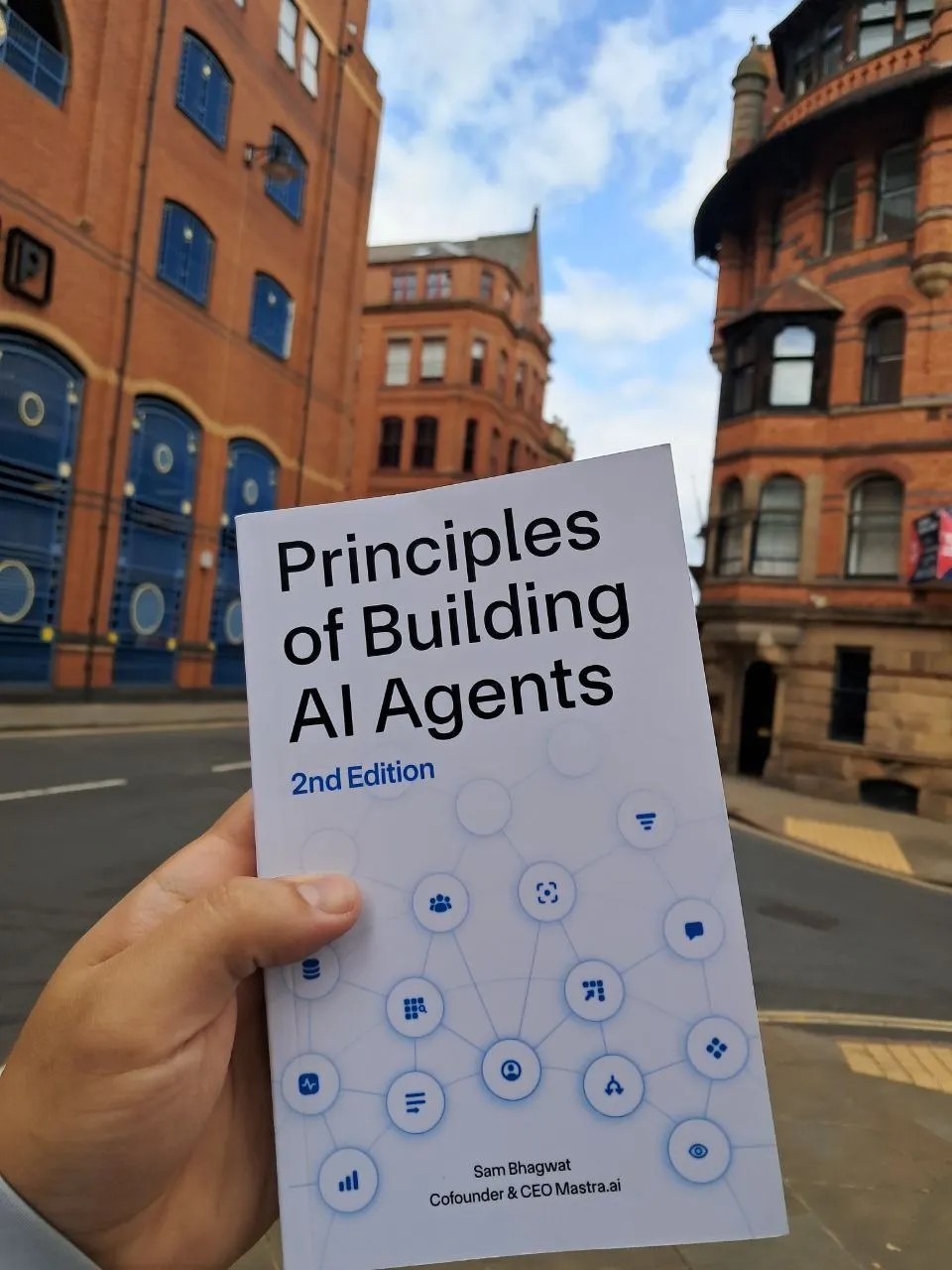
Mastra's agent books are the current standard for dev founder content in the AI world. It's become a trend for devs to post pics of themselves holding the books as soon as they arrive. Growth loop as meme. Now there are 180,000 AI agent books in hands, making a new agent dev every day.
On GTM execution, the books open doors. Sam's voice is the value. Managers all over the world read it, then order boxes for their teams. A top and middle of funnel playbook built in.
Done well, it's not much of a sell. Struggle with agents. Read the book. Share the book. Build with Mastra (or not, the book is agnostic). Scale with Mastra. Buy into the latest and greatest capabilities (again, optional).
Sam started small, doing whiteboard sessions for his YC batchmates struggling to build production agents. The book is just the scaled version of the same thesis he's been articulating all along.
You don't need to write two books and spend $10M standing up e-commerce grade print/ship logistics to give them away for free. It helps! But you need to find a way to express yourself that feels natural and repeat the mechanics.
DeepTrail is a recent client and an example you can learn from if you're just starting out.
They're building a trust layer for AI agents that adds runtime identity and task-scoped permissions. An exciting space and a deeply challenging problem.
Mahendra Kutare, their founder, asked us: "What content should I be creating that will be maximally helpful for driving funnel?" A+ question.
Our answer: The most important thing you can be doing at this very early stage is writing about the problem space you're solving for and weaving in the business pain with your approach to technical execution.
That direction led to a series of LinkedIn articles he writes at night after days of building product and running discovery calls.
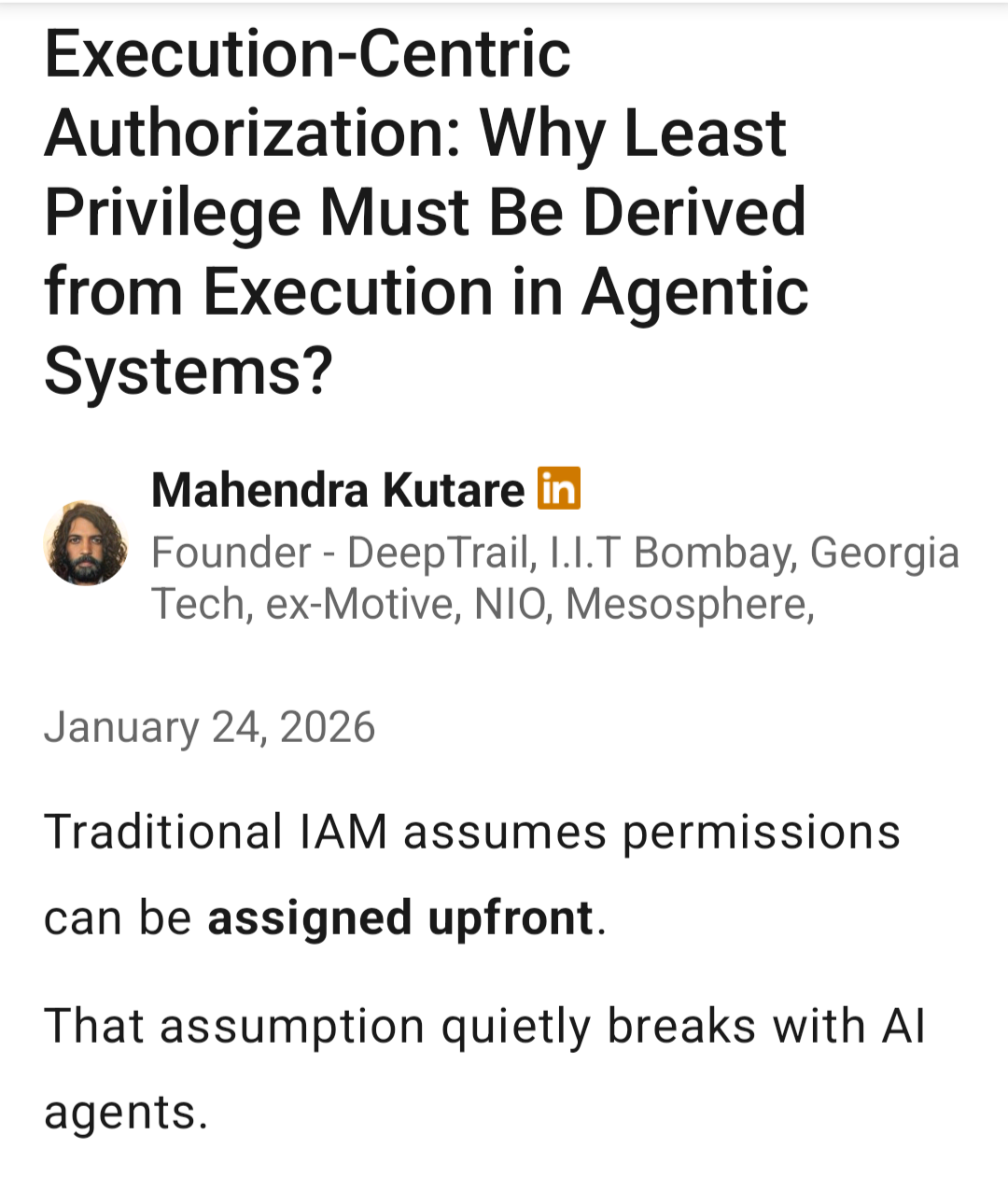
DeepTrail’s core problem statement is “AI agents should have identity and accountability."
Mahendra's writing helps fuel the early funnel:
The founder's voice is not selling the product. It's selling the problem and how he thinks about it. His voice is the value exchange in the critical early stages, driving conversations that lead to product interest and pilot projects with design partners.
The beginning of rocketship software companies looks something like this.
Every founder can repeat this. Writing, podcasts, video, Twitter, LinkedIn, talks at meetups. Pick the medium that's most comfortable.
Be consistent. The flywheel starts with you. Your worldview is your growth engine. Your go-to-market will help you turn it into pipeline.
If you're at the inflection point, technology proven, market waiting, and the canyon between them, we should talk.